

ESPP Weekly Update (10/12/2026)
ESPP News & Announcements
ESPP Spotlight
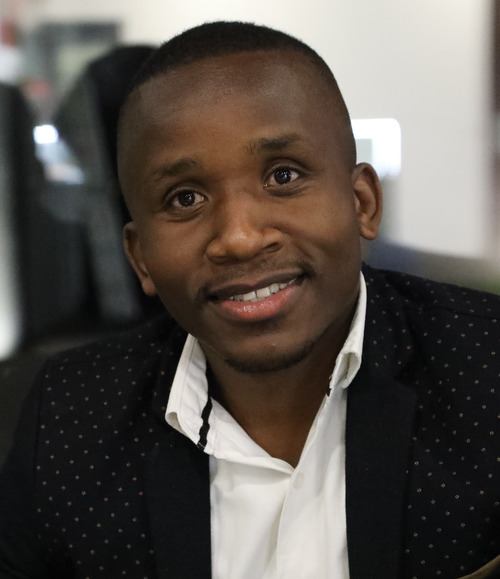
Tasha Siame publishes new study on park access disparities in Flint
As Flint awaits a major new state park along the Flint River, ESPP dual-major doctoral student Tasha Siame has published a study in Scientific Reports examining who has access to parks — and who uses them — among residents impacted by the Flint water crisis. The study found that non-Hispanic Black residents lived farther from nearby parks than other groups, that greater distance was associated with lower odds of frequent park use, and that perceived park quality, safety, and maintenance mattered as much as location. The work offers a baseline for equity-focused planning as the new riverfront park takes shape, and a lesson for communities investing in green space everywhere: access goes beyond distance. Co-authors include Rick Sadler, Elizabeth Perry, Alan Harris, Lifeng Luo, and Samantha Gailey.
Course Announcements
-
GLG 813: Watershed Hydrology (Spring 2027) — Dr. Jay Zarnetske, Tuesdays & Thursdays 12:40–2:00 PM, 3 credits.
Addresses six fundamental questions: where water goes when it rains or snows, how long it resides in a watershed, what flowpaths water takes to a stream, what processes control water storage and movement and how we model them, the history of watershed hydrology, and why the answers matter to society and ecosystems. Students gain experience reading literature, conducting technical writing and teaching, and applying course topics to their own research. This course is appropriate and accessible to all environmental scientists, managers, and engineers. Undergraduate students welcome! Questions: jpz@msu.edu.
-
CAS 892-001: Risk Communication (Spring 2027) — Dr. John C. Besley, Tuesdays 3:00–5:50 PM.
Spring semester seminar teaching students to apply evidence-based principles of effective risk communication through small-group discussions, selected readings, and hands-on exercises. Dr. Besley is the Ellis N. Brandt Professor of Public Relations and author of Strategic Science Communication: A Guide to Setting the Right Objectives for More Effective Public Engagement (Johns Hopkins University Press, 2022). Key topics include goal-focused communication about risks and benefits, social norms, self-efficacy, trustworthiness, emotion, and framing. Suitable for master’s students who want to become more effective science and risk communicators, as well as Ph.D. students who want to ground their research and engagement activities in insights from science and risk communication research.
-
SOC 890: Skills and Practices for Social Change (Spring 2027) — Dr. Jennifer Carrera, Tuesdays 1:50–4:40 PM, Berkey Hall Room 457.
Graduate practicum guiding students in developing and facilitating skills in reflective listening, identifying dimensions of vulnerability, and co-creating actionable plans to address priority issues within groups while reducing harm to and burden on vulnerable individuals. Appropriate to all majors with a desire to work directly with communities; STEM students are encouraged to participate, and qualitative social science students will find the course enhances interviewing skills. Limited to 15 students, with priority to students actively planning community-engaged research. To register, scan the QR code on the flyer or contact Sociology Academic Programs Coordinator Taylor Gallagher (galla352@msu.edu).
Seminars, Workshops & Other Events
Water Alliance Lunch & Learn: Harmful Algal Blooms
The MSU Water Alliance Lunch & Learn series features Aquatic Ecology hub co-lead Dr. Elena Litchman and Carol Waldmann Rosenbaum discussing harmful algal blooms. Register here.
Spring 2027 Admission Deadline
The Environmental Science and Policy Program is now accepting applications for the 2027 Spring Semester. ESPP offers three distinct programs for graduate students at MSU: the dual major doctoral program in environmental science and policy (incoming Ph.D. students or students within their first two doctoral years), the graduate specialization in environmental policy (master's students), and the graduate certificate in environmental and social systems modeling (master's students). For more information, including how to apply, visit espp.msu.edu/education or contact espp@msu.edu.
ESPP Competitive Research Grant Submission Deadline
The ESPP Competitive Research Grant (CRG) is designed to support interdisciplinary student research at the intersection of environmental science and policy. Expenses should directly support the student's research; allowable expenses include travel, software, instrumentation costs, and participant support costs. If travel is included, it must be approved prior to anticipated travel dates. Equipment is not an allowable expense. Students may not combine these grants with other College of Social Science fellowships. Details on the CRG page.
Knight Center Mary Gardner Lecture: “Navigating Uncertainty: The Craft of Environmental Journalism in Latin America” — Maria Isabel Torres
The Knight Center for Environmental Journalism hosts the 2026 Mary A. Gardner Endowed Lecture with Maria Isabel Torres, Program Director at Mongabay. Drawing on her experience at Mongabay Latam, she will explore the challenges and opportunities of covering environmental stories across Latin America and discuss how reporters produce rigorous, innovative, and impactful journalism amid uncertainty.
Water Alliance Lunch & Learn: Water Connects Us All: Ireland and the U.S.
The MSU Water Alliance Lunch & Learn series features Dr. Kelly Salchow MacArthur and the WiseWater team, exploring how water connects Ireland and the United States. Register here.
ESPP 2026 Fall Student Research Symposium
The ESPP 2026 Fall Student Research Symposium, themed “Sustainable Food Systems,” highlights student research that embraces the challenges and opportunities inherent to improving the sustainability and resilience of our food systems. The event features oral and poster presentations and a round of lightning talks for selected poster presenters. The keynote, “Digital Agriculture to Design Sustainable and Resilient Agricultural Systems,” will be delivered by Dr. Bruno Basso, John A. Hannah Distinguished Professor and MSU Research Foundation Distinguished Professor at Michigan State University, an internationally recognized agricultural systems scientist. Graduate students, post-doctoral researchers, and undergraduates from all departments are welcome. Co-sponsored by ESPP and the College of Social Science.
Scholarships, Fellowships, & Funding Opportunities
-
Michigan Chapter SWCS Conservation Scholarship ($1,000) | Deadline: November 9, 2026
The Michigan Chapter of the Soil and Water Conservation Society (MiSWCS) is offering a $1,000 scholarship through the Michigan Scholarships in Conservation Program for the Fall 2026 – Spring 2027 academic year. Applications must reach the Scholarship Committee by November 9, 2026; the recipient will be selected by November 30, 2026. The fillable application is available on the MiSWCS website or from Chapter Secretary Daniel F. Kesselring (kesselring@miglswcs.org).
-
USGS 104(g) General Funding Research Opportunity | Deadline: November 12, 2026, 5:00 PM ET
The United States Geological Survey is accepting applications under the 104(g) General Funding Research Opportunity, supporting water resources research projects. Applications must be submitted by 5:00 PM Eastern Time on November 12, 2026. The MSU Institute of Water Research team is available to answer questions.
-
2027 Switzer Environmental Fellowships | Deadline: December 14, 2026, 11:59 PM PST
The Switzer Foundation is accepting applications for the 2027 Switzer Environmental Fellowships, given to graduate students who demonstrate outstanding leadership potential and commitment to a career in environmental improvement. Eligibility is no longer restricted to California and New England schools — the fellowship is now open to graduate students at accredited institutions throughout the United States and U.S. territories. Each fellowship includes a one-year $18,000 unrestricted cash award, two multi-day leadership training and cohort-building retreats, access to grant programs and career support, and engagement with the Switzer Network of 800+ environmental leaders. Students of color, first-generation students, and students from traditionally underrepresented groups are strongly encouraged to apply. An information session will be held November 18, 3–4 PM EST (register via Eventbrite).
Job and Training Opportunities
-
The Kennedy School invites applications for two faculty positions in energy and climate change. The first is a tenure-track junior scholar position applying disciplinary tools (preference for political science or economics) to questions in energy policy, energy markets, the politics and geopolitics of energy, the energy transition, and/or climate change, with a joint appointment at the Salata Institute for Climate and Sustainability. The second is a full-time Lecturer position combining practical experience in energy and climate policy with teaching excellence (initial three-year appointment, possibility of renewal). Submit a cover letter, CV, research/teaching statement, and writing samples via the posting link; review begins October 15, 2026 and continues until filled.
-
The Duke University Nicholas School of the Environment is hiring a Postdoctoral Associate in Policy at the Duke Critical Minerals Hub, focused on critical minerals policy and governance. Details and application instructions are available online. Questions may be directed to Erika Weinthal or Kimberly R. Marion Suiseeya.
-
MSU will host National Geographic Explorer Dr. Reyhaneh Maktoufi for a communications workshop on “Strategy and Storytelling,” aimed at faculty, post-docs, research staff, and Ph.D. students. Drawing on narrative research, the session uses examples and activities to discuss storytelling principles and help participants find the right story based on their goals. The workshop is offered at no cost through support from University Outreach and Engagement, University Communications and Marketing, the College of Natural Science, Graduate Studies, and the College of Communication Arts and Sciences through the Health and Risk Communication Center, and the Brandt Endowment. Space is limited — register here; questions: jbesley@msu.edu.
-
The Michigan Section of the American Water Works Association (MI-AWWA) is hosting its second Young Professionals Summit on March 9–10, 2027 at Lansing Community College (West Campus), only about a 10-minute drive from campus. The event connects young professionals (generally under 35) with water experts to build professional networks and engagement with Michigan's water community. Undergraduate and graduate students and early-career professionals working in the water space are encouraged to submit a presentation abstract via mi-water.org/yp-summit by October 30, 2026.
Environment News
-
Thousands without power in Florida and Alabama as Isaias moves north (The Guardian)
At least four deaths have been linked to Hurricane Isaias as it moves north through the Southeast, leaving hundreds of thousands without power across Florida and Alabama, with flash-flood warnings stretching into Appalachia.
-
EU to limit Chinese hybrid vehicle imports to 350,000 a year (The Guardian)
The EU has agreed to cap annual imports of Chinese hybrid electric vehicles at 350,000 units, a trade-and-climate policy move to protect Europe's domestic auto industry as it pivots toward electrification.
-
Ministers preparing to slash heat pump subsidies to fund defence spending (The Guardian)
The UK government is reportedly preparing to cut heat pump subsidies to redirect funds toward defence spending — a decision that could jeopardize Britain's net-zero heating targets.
-
UK bluefin tuna comeback shows nature can recover, says WWF (BBC)
A return of bluefin tuna to UK waters after decades of overfishing is hailed by the WWF as proof that marine ecosystems can rebound when conservation measures work.
-
World's largest penguin colony hit by 'alarming' decline in numbers (BBC)
The world's largest chinstrap penguin colony on a remote volcanic island is suffering a dramatic decline, which scientists blame on climate change disrupting Southern Ocean food webs.