

ESPP Weekly Update (09/28/2026)
ESPP Spotlight
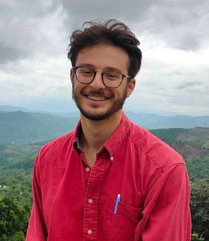
ESPP Doctoral Student Leo Baldiga Publishes in Journal of Rural Studies on Life After an Aquaculture Boom in Thailand
ESPP dual major doctoral student Leo Baldiga is first author of a new open-access study in the Journal of Rural Studies that asks a question most research on “crop booms” has overlooked: what happens after the boom is over? Focusing on shrimp and fish farming around Bangkok, “What happens after the boom? Aquaculture, land use change, and smallholder resilience in Central Thailand” (Vol. 128, 2026, article 104417) uses three decades of satellite data, a survey of 455 farm households across eight provinces, and in-depth interviews with 40 farmers to show that post-boom livelihoods did not collapse into dispossession and monoculture — instead, smallholders kept farming, kept diversifying, and kept their land.
The research was conducted in collaboration with Ben Belton, Lin Yan, David P. Roy, Meicheng Shen, and colleagues in Thailand, and was supported by the NASA Land Cover Land Use Change program. Read the full news story or the open-access paper.
Seminars, Workshops & Other Events
Documentary Film Screening & Discussion: “A Benton Harbor Story”
The Center for Integrative Studies in General Science and the Environmental Justice & Climate Action Learning Community present the MSU premiere of A Benton Harbor Story, a documentary by MSU Sociology PhD alum and filmmaker Dr. Cedric Taylor. The film examines how decades of disinvestment, state emergency management, and failing infrastructure set the stage for a water crisis in Benton Harbor, Michigan, and shows how residents organized to fight for safe water, accountability, and a voice in decisions shaping their community. Echoing Flint while telling a distinct story of its own, the film explores environmental justice, democracy, and the unequal burdens borne by Black communities when public systems fail. Doors open at 6:30 p.m.; the film begins at 7:00 p.m., followed by a panel discussion. Learn more here.
IWA World Water Congress & Exhibition (October 4–8)
The 15th World Water Congress will take place in Glasgow, UK, with around 10,000 participants expected from around the world. It brings together thought-leaders, decision makers, top researchers, and business innovators from across and beyond the water sector to shape the future of water. More information.
Hanover Forest Science Seminar: “Building a Sustainable Forest Bioeconomy through Forest Economic Modeling, Market Innovation, and Decision Support” — Raju Pokharel
Fourth of six in the Hanover Forest Science Seminar Series (Mondays, 11:30–12:30 PM ET, Room 338 Natural Resources, broadcast over Zoom).
Community Sustainability, Hamm-Norris Seminar: “The Role of Restaurants and Chefs in Addressing the Climate Crisis” — Taylor Reid
The food system is responsible for one-third of the global climate footprint, and across the planet people are increasingly eating food prepared by restaurants and institutions. This presentation will discuss both the effect of global climate change on restaurants and chefs and the impacts of the decisions made within restaurants on the size of their climate footprints, and will conclude with thoughts about how restaurants, chefs, and eaters might work together to address the climate crisis. Taylor Reid is Professor of Applied Food Studies at the Culinary Institute of America. Zoom login information is available here.
2026 Great Lakes Microplastics Summit (October 7–8)
The Michigan Department of Environment, Great Lakes, and Energy hosts this dynamic two-day virtual event uniting scientists, professionals, policymakers, and community members to explore the growing impact of microplastics on our freshwater systems, including advances in detection methods, risks to human and environmental health, interactions with other contaminants, and strategies to regulate, reduce, and replace. Register here.
Hanover Forest Science Seminar: “Lignin Valorization: From Scientific Discovery to Industrial Impact” — Mojgan Nejad
Fifth of six in the Hanover Forest Science Seminar Series (Mondays, 11:30–12:30 PM ET, Room 338 Natural Resources, broadcast over Zoom).
Scholarships, Fellowships, & Funding Opportunities
-
JB Ashtin Medical Communications Fellowship Program (Catalyst) — deadline Sunday, November 1, 2026
A 52-week fellowship for doctoral students with an advanced life science degree who want a career in medical communications and a passion for writing. The program pairs a 12-week course with a year of hands-on medical writing and scientific content development; on completion, successful fellows may join JB Ashtin as a full-time medical writer if a position is open.
Job and Training Opportunities
-
The Kennedy School invites application for two faculty positions in Energy and Climate Change. The tenure-track position is open to junior scholars who apply the tools of their discipline (preference for political science or economics, though exceptional candidates from other fields will be considered) to important questions in energy policy, energy markets, the politics and geopolitics of energy, the energy transition, and/or climate change; a doctorate and a demonstrated interest in policy engagement are required, and the position will be jointly appointed with the Salata Institute for Climate and Sustainability. The lecturer position is a full-time teaching appointment in public policy focusing on energy and climate change, seeking candidates with extensive practical experience and a demonstrated record of teaching excellence; the initial three-year appointment may be renewed. The committee will begin considering applications on October 15, 2026, and will continue until the positions are filled.
Environment News
-
Datacenter developers accused of skirting key US pollution rules (The Guardian)
As AI datacenter construction races ahead, developers are accused of skirting key US pollution rules, with scrutiny of projects like “Project Jupiter” highlighting how the industry’s rapid expansion is outpacing environmental oversight.
-
Grizzly reality: US states grapple with uptick in encounters between bears and humans (The Guardian)
US states are wrestling with a sharp uptick in encounters between bears and humans; the week’s most visible incident saw a French bulldog die protecting a northern California couple from a bear attack on September 19.
-
Nor’easter storm batters US east coast with heavy winds and power outages (The Guardian)
A powerful nor’easter slammed the US east coast with heavy winds, flooding, and widespread power outages, underscoring the vulnerability of coastal infrastructure to increasingly intense late-season storms.
-
New research finds 485 chemicals in US pesticide products linked to breast cancer (The Guardian)
Researchers found that 485 chemicals present in US pesticide products are linked to breast cancer, renewing calls for tighter regulation of the chemicals sold for agricultural use.
-
Most of UK’s essential food supply grown in drought-risk areas, report warns (The Guardian)
A new report warns that the majority of the UK’s essential food supply is grown in areas exposed to drought risk, with withering crops from Suffolk to the Midlands illustrating the threat to national food security.