

Weekly Update (11/24/2025)
ESPP News
-
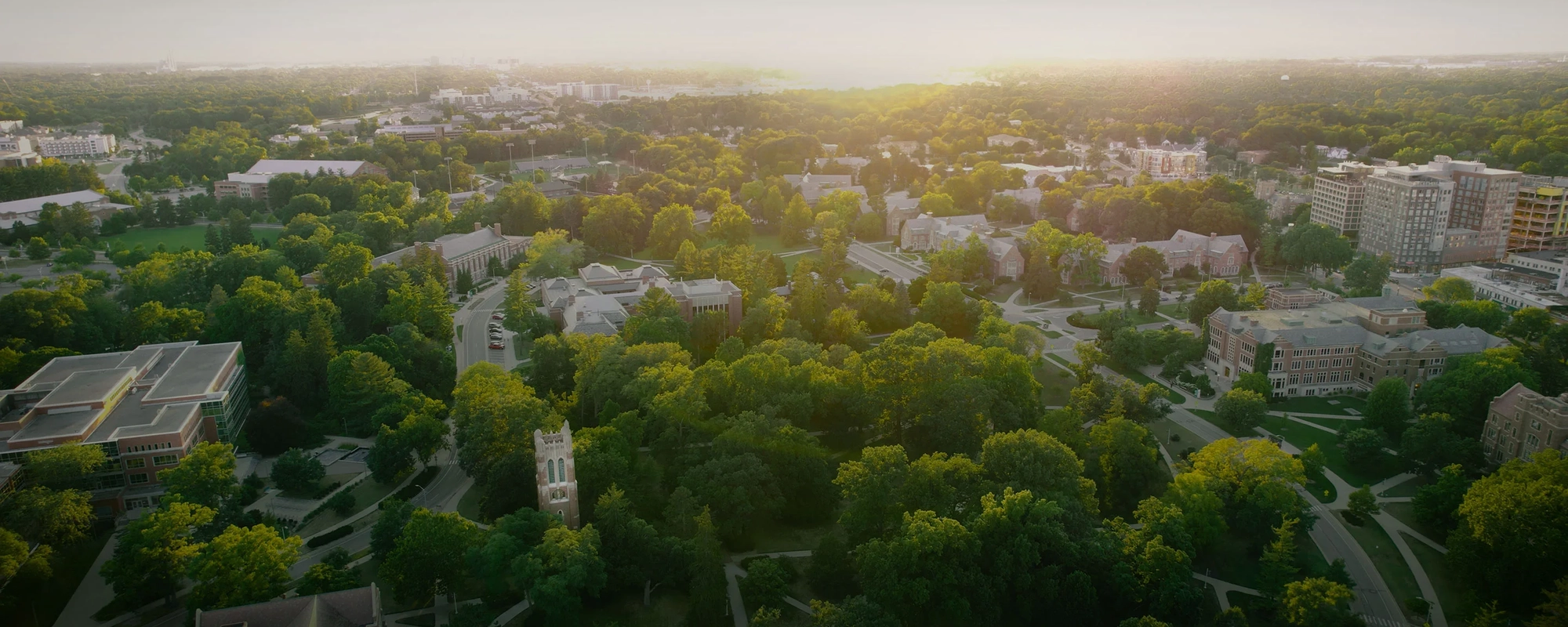
MSU earns top 50 ranking for environmental responsibility, sustainability
MSU is ranked No. 42 in the Princeton Review Guide to Green Colleges: 2026 Edition for its strong culture of environmental responsibility and commitment to campus sustainability.
-
Looking for researchers with expertise in indoor air quality
The residence halls on campus are looking to get connected with researchers that have expertise in indoor air quality, allergens or other airborne irritants. If you have any recommendations of experts working in this area, please contact Laura Young at the Office of Sustainability.
Course Announcements
-
CSUS 824: Sustainable Development
Dr. Maria Claudia Lopez will offer this graduate course in Spring 2026. The study of sustainable development reveals a tension between a concern for human needs and for the scale of the impacts of human demands on nature. This graduate course explores the challenges of environmental sustainability and social justice in the context of global economic development. We will review the principles of sustainable development in both theory and practice, with a focus on measuring social and economic welfare at national and local scales. The course will examine the extensive literature and policy frameworks associated with conventional notions of sustainable development along with divergent concepts and models that challenge mainstream thinking. Drawing on theories of development, sustainability science, and economic growth, we will examine traditional and alternative indicators of sustainable development, encompassing the social, economic, and environmental dimensions of human well-being. Students will apply their understanding of sustainability indicators in a specific developmental and environmental context related to their interests. The course will include theoretical and empirical readings, reflective discussions and essays.
-
CSUS 826: International Development
Dr. Michael Olabisi will offer this graduate course in Spring 2026. The course offers a multidisciplinary exploration of international development theory. It focuses on measurements, processes, and effects of development and poverty. The course complements the theory with sections on practical issues that include ethnicity, social class, gender, and community influences on socioeconomic processes. This course serves: graduate students from all over campus interested in international development, including those pursuing the graduate specialization in international development.
-
ANP 491: Cultural Resource Management
This course provides an introduction to Cultural Resource Management (CRM), which comprises an estimated 80 percent of the professional archaeology conducted in the United States. This course will explore the broad range of laws that govern archaeological research in the public sector. Practical elements of doing CRM archaeology incorporated into the course include the importance of anthropological theory in CRM, development of regulation-driven research designs, production and evaluation of CRM reports, applying National Register criteria, evaluating significance, assessing effect, management of archaeological projects, phasing of archaeological research, curation of collections, ethical issues, and the concepts of traditional cultural properties and ownership of information about the past. A primary focus will be on the multiple stakeholders in these processes, including developers, archaeologists, and Indigenous groups, and it will lay the foundation for non-academic careers in archaeology. Contact Dr. Phyllis Johnson for questions.
A list of courses that are offered by ESPP affiliated faculty members is now available on ESPP website.
Scholarships, Fellowships, and Funding Opportunities
-
Great Lakes Fisheries Graduate Fellowship | Deadline: December 5, 2025
The William W. Taylor & Henry A. Regier Great Lakes Fisheries Graduate Fellowship supports MSU graduate students conducting research on the sustainability of fish, wildlife, and water resources, with a focus on the Great Lakes and human–environment connections. For further information pertaining to this fellowship, please contact tgsawards@grd.msu.edu.
-
CIGLR accepting proposals for 2026 Partner Programs | Deadline: Jan 31, 2026
CIGLR is accepting proposals from Regional Consortium members for a suite of programs that aim to build collaborative partnerships through career development opportunities, visionary science, and impactful outreach. The opportunity includes Postdoctoral Fellowships, Graduate Research Fellowships, Summits and Working Groups support, ECO support, and Seed Funding. Please visit the full program announcements linked below for descriptions, eligibility, and application information. More information can also be found on the CIGLR website. Contact CIGLR Managing Director Mary Ogdahl with questions.
Seminars, Workshops, and Other Events
-
Spartan Wellbeing Summit: Call for Student Posters | Deadline, December 14, 2025
Have you worked on a project that that aims to advance health and wellbeing at MSU? Share it at the Spartan Wellbeing Summit on Thursday, February 26, 2026! Whether it’s research, advocacy, or a campus initiative, University Health and Wellbeing (UHW) and the Spartan Wellbeing Collective want to showcase your idea.
Jobs and Training Opportunities
-
Tenure-Track faculty position in remote sensing of the built environment
The Department of Geography at Texas A&M University is hiring a scholar who is experienced in the use of remote sensing to study the built environment. The Department views the study of the built environment (broadly understood as urban areas and critical physical infrastructure) and the use of remote sensing as important scholarly areas. This position will enrich the growing research activity on urban areas and critical infrastructure in the department, the college, and the university. It will also support the department’s undergraduate and graduate programs as well as the college-level Environmental Programs and a graduate certificate program in Geospatial Intelligence. The full ad and the link to apply is here.
-
Research activities will include the development and application of advanced deep learning frameworks to model and predict animal movement and habitat selection. The fellow will integrate spatially and temporally explicit environmental covariates (e.g., NDVI, vegetation structure, topography, seasonality), enabling nuanced exploration of how landscape features and dynamic conditions influence animal movement decisions at multiple scales. Research will involve constructing, training, and evaluating AI models capable of simulating realistic movement trajectories, identifying patterns in resource selection, and revealing how animals interact with variable or human-modified environments. Reach out to Neil Carter to determine research fit.