

Tasha Siame’s newest publication on disparities in park access and use among residents impacted by the Flint water crisis
October 12, 2026
 As Flint awaits the development of a major new state park along the Flint River, which is planned to connect five parks. An ESPP dual-major doctoral student Tasha Siame publishes a new study in Scientific Reports that examined who has access to and uses parks, and what sociodemographic and contextual factors affect access and use among residents impacted by the Flint water crisis.
Parks play an important role in health and well-being. They help reduce heat and flooding, provide places for physical activity, reduce stress, and help people relax and connect with family and friends. However, access is unevenly distributed in disinvested communities in the US. This limits opportunities among populations to enjoy the potential health benefits parks can offer.
Findings
- Park access is unequal. Non-Hispanic Black residents lived farther from nearby parks than non-Hispanic White residents and participants from other racial and ethnic groups.
- Distance is associated with park use. Residents living farther from nearby parks had lower odds of using parks frequently.
- Age is associated with park use. Adults aged 18-29 were more likely to use parks frequently than those aged 30-44, while adults aged 45 and older were less likely to do so.
- Quality is associated with park use. Residents who perceive their neighborhoods as more supportive/friendly to physical activity and their parks as higher quality had higher odds of using parks frequently. Safety, maintenance, and amenities were among the most important park features.
What this means to Flint and beyond
For Flint, these findings provide a baseline for understanding who can access and use local parks as the city prepares for a new state park along the Flint River. The study highlights the importance of considering not only where parks are located, but also whether residents feel safe using them and find them well maintained and welcoming.
Beyond Flint, the study offers a lesson for communities investing in parks and/or green spaces. Access goes beyond distance. Planning that considers residents’ experiences, needs, and perceptions of their neighborhood or environment can help communities work toward more equitable access to the health benefits of outdoor green spaces.
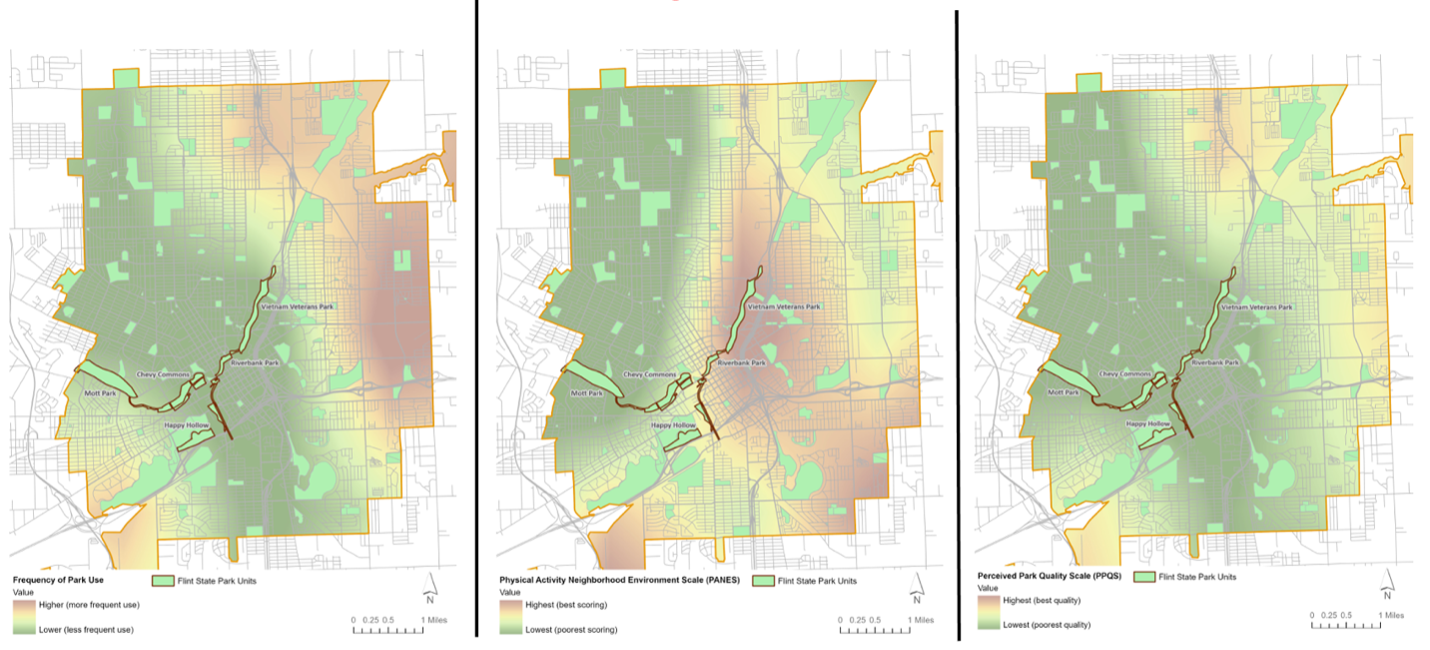
Mapping patterns of park use, physical activity neighborhood environment, and perceived park quality in Flint
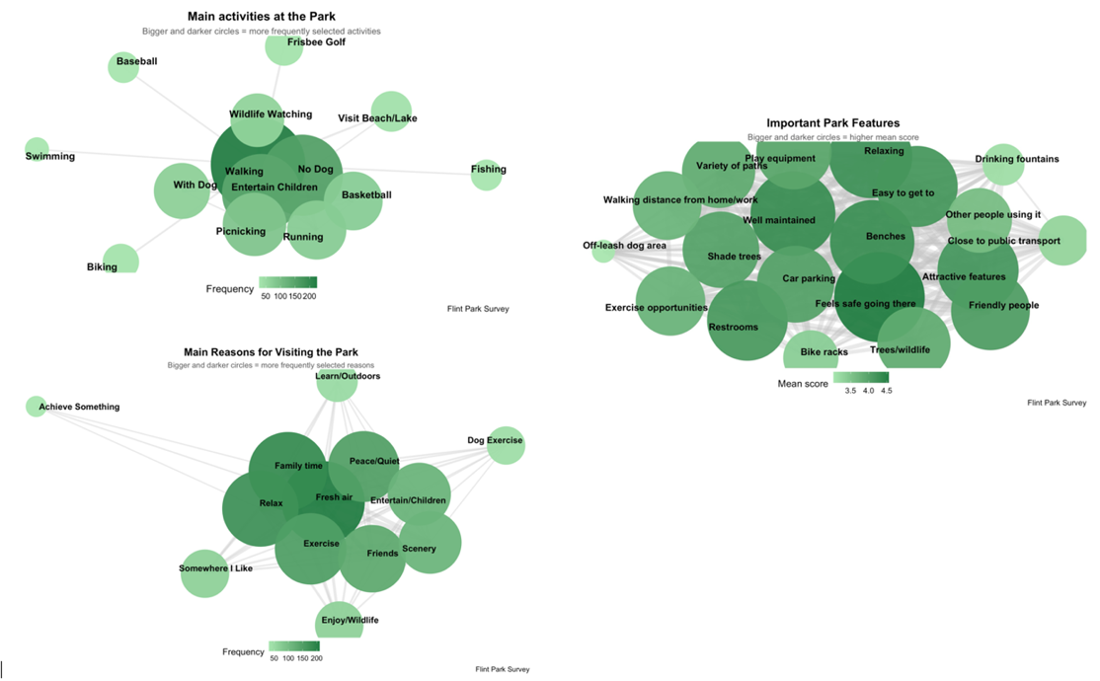
Residents’ activities, reasons for visiting parks, and most important amenities