

Dissertation Defense: Jonathan Vivas Aragon
Thu, June 18, 2026 10:00 AM at Room 320, Natural Resources Building
DISSERTATION DEFENSE
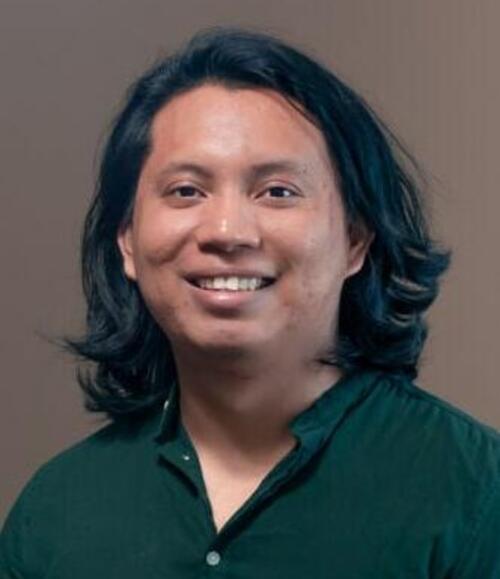
Jonathan Vivas Aragon
|
Jonathan is a Ph.D. student in the Community Sustainability Department and the Environmental Science and Policy Program. His academic interests revolve around sustainable agriculture and natural resource management. Specifically, his research integrates socio-ecological resilience and economic theory to explore the social, environmental, and economic impacts resulting from the adoption of technology or management practices in agricultural systems. His work is interdisciplinary in nature, blending qualitative and quantitative methods, and has done research in Nicaragua, Taiwan, Costa Rica, and the US. Currently, he’s part of a research team studying the relationship between socio-ecological well-being and the adoption of regenerative grazing practices in cattle beef farms in the United States. He holds a bachelor's degree in Applied Economics from Nicaragua and a master's in Agriculture from Taiwan and is part of the Resilience Alliance Young Scholars Network.
|
|
DISSERTATION TITLE |
Understanding of the Relationships between Human Wellbeing and Grazing Management in US Cow-Calf Operations
|
DATE |
Thursday, June 18, 2026 |
TIME |
10:00 AM EDT |
LOCATION |
Room 320, Natural Resources Building |
COMMITTEE MEMBERS |
Dr. Maria Claudia Lopez Department of Community Sustainability (Chair & Advisor) |
Abstract:
Cow-calf operations play a critical role in sustaining rural livelihoods and contributing to the sustainability of the agricultural sector in the United States, yet these systems face mounting challenges. Rangeland degradation stemming from overstocking and inadequate grazing management, alongside declining water, soil, and biodiversity, threatens the wellbeing of farmers and the resilience of beef production. Sustainable grazing strategies, such as adaptive management, have emerged as a promising way to balance production with environmental stewardship and social wellbeing. Although policy frames human wellbeing as a desirable outcome of sustainable transformation, and research linking grazing management to social and ecological outcomes is growing, the relationship between grazing practices and producer wellbeing, especially subjective wellbeing, in cow-calf systems remains notably limited.
This dissertation is motivated by the urgent need to transform cow-calf operations into systems that operate within Earth’s safe environmental boundaries while enhancing human wellbeing. Built around three interdependent articles, it progressively characterizes the relationship between grazing management and the subjective wellbeing of US cow-calf producers in Michigan, Oklahoma, and Texas. The first study uses an explanatory sequential mixed methods design to examine how grazing management contributes to producers’ capacity to regulate their subjective wellbeing and how it state feed back into their grazing decisions. The second study applies fuzzy cognitive mapping to aggregate producers’ mental models and reveal how they perceive the causal pathways linking grazing management to wellbeing. The third study develops an agent-based model that couples a homeostatic wellbeing process to grazing decisions and rangeland dynamics. Together, the three studies extend our understanding of the wellbeing–grazing relationship and offer a foundation for integrating the nuances of human wellbeing into social-ecological models of cow-calf systems, with implications for future research on the resilience of these operations.
This dissertation is motivated by the urgent need to transform cow-calf operations into systems that operate within Earth’s safe environmental boundaries while enhancing human wellbeing. Built around three interdependent articles, it progressively characterizes the relationship between grazing management and the subjective wellbeing of US cow-calf producers in Michigan, Oklahoma, and Texas. The first study uses an explanatory sequential mixed methods design to examine how grazing management contributes to producers’ capacity to regulate their subjective wellbeing and how it state feed back into their grazing decisions. The second study applies fuzzy cognitive mapping to aggregate producers’ mental models and reveal how they perceive the causal pathways linking grazing management to wellbeing. The third study develops an agent-based model that couples a homeostatic wellbeing process to grazing decisions and rangeland dynamics. Together, the three studies extend our understanding of the wellbeing–grazing relationship and offer a foundation for integrating the nuances of human wellbeing into social-ecological models of cow-calf systems, with implications for future research on the resilience of these operations.