

CEE Seminar: Challenges in environmental observing system design: Perspectives from Antarctica to the Great Lakes
Tue, March 24, 2026 11:30 AM at 3405AB – Dean’s Conference Room, College of Engineering
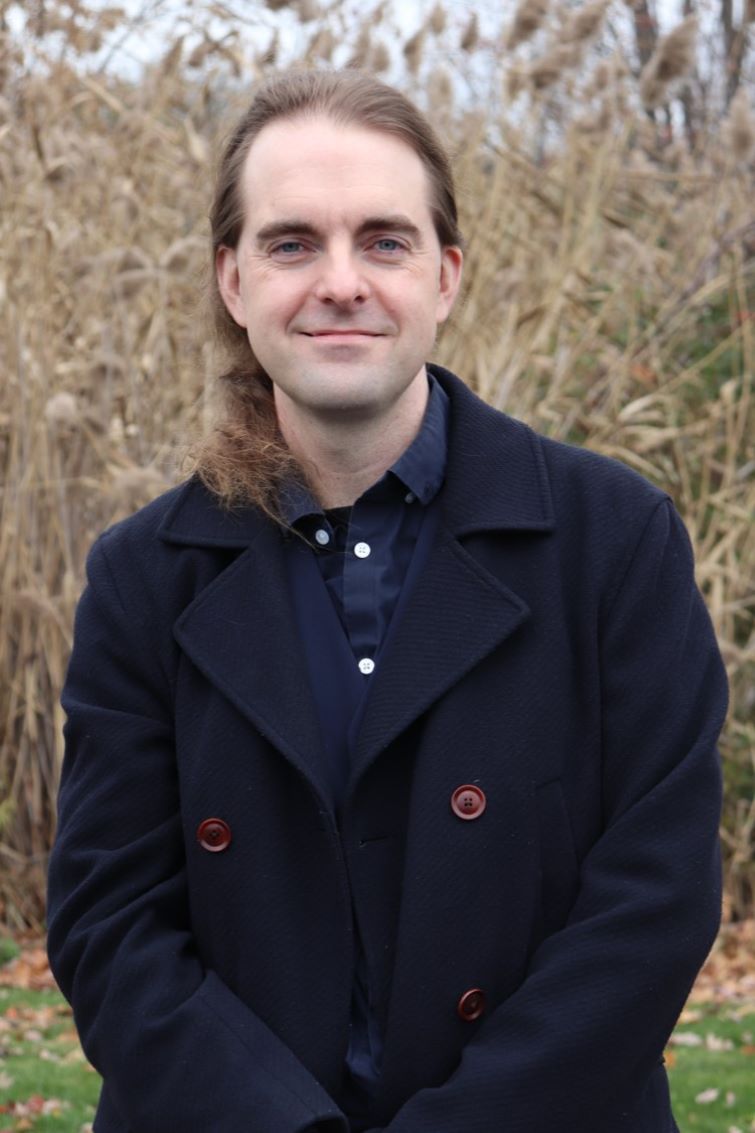
Title: Challenges in environmental observing system design: Perspectives from Antarctica to the Great Lakes
Speaker: Dr. Dani Jones, CIGLR, Ann Arbor
Time: 11:30 AM, Tuesday, March 24, 2026
Venue: 3405AB – Dean’s Conference Room, College of Engineering
Abstract:
Marine observing systems are critical for monitoring and prediction, but resources are limited and the systems themselves are vast, dynamic, and difficult to measure. Satellites provide valuable near-surface information, yet in situ observations remain necessary for subsurface structure, validation, and localized processes. Designing an effective network therefore requires a clear definition of the quantity of interest and a framework for evaluating how observations reduce uncertainty in state estimates and forecasts. This talk reviews quantitative approaches to observing system design (including OSEs, OSSEs, adjoint-based uncertainty methods, correlation-based optimization, and emerging machine learning tools) and discusses their application from Antarctic field campaigns to buoy placement in the Great Lakes. I highlight both the strengths and the limitations of these methods, particularly the need to balance formal optimality with logistical and community constraints.
Bio: Dani Jones is a Research Faculty member at the Cooperative Institute for Great Lakes Research (CIGLR) at the University of Michigan. Their work focuses on applying machine learning and artificial intelligence to environmental forecasting, observing system design, and water resource management in the Great Lakes. They lead projects integrating neural processes, unsupervised classification, and decision-focused modeling to improve predictions of water levels, evaporation, and storm impacts. Dani works closely with NOAA GLERL, GLOS, and regional stakeholders to develop ML/AI tools that work alongside human expertise in Great Lakes science and management
Persons with disabilities have the right to request and receive reasonable accommodation. Please call the Department of Civil and Environmental Engineering at 517-355-5107 at least one day prior to the seminar; requests received after this date will be met when possible.